

How to Choose a Meal Replacement Shake: A Practical Checklist
By Floris Wolswijk, CEO of Queal · Sources checked
Choose a meal replacement shake by checking what it is designed for, the nutrition in the portion you will actually drink, its ingredients and allergens, and whether it fits your day. Then try a small order before committing. A shake with impressive packaging is little use if you dislike the texture or cannot prepare it at work.
This guide is written by Queal, which makes complete meals including Steady shakes. It focuses on busy adults choosing an everyday breakfast or lunch in the Netherlands and EU.
1. Check what the product is intended to replace
Start with your purpose: a quick lunch between meetings, breakfast before commuting, or something else.
Products described as complete foods or complete meals are marketed for everyday meals. Products making authorised weight-control meal-replacement claims have specific conditions, including energy and nutrient requirements. Those claims concern use within an energy-restricted diet. Do not assume that every shake replacing a meal is a weight-loss product, or that complete automatically means suitable for every dietary need. EU weight-control claim conditions.
For everyday convenience, look for a clearly described meal product and a full nutrition table. If your choice concerns a medical condition or prescribed diet, take the product label to your healthcare professional. Our protein-versus-meal comparison explains the difference in intended use.
2. Compare the portion you will actually use
A serving is not a standard meal size across brands. One product may show a small portion prominently while another uses a much larger one.
Write down the powder weight, energy and mixing instructions for each option. Check whether the figures describe dry powder or the prepared drink. Milk and other additions change the result.
EU nutrition declarations use a per-100g or per-100ml basis, with portion information allowed alongside it. Use the common basis to understand the products, then compare the portions you intend to eat. European Commission nutrition-labelling guidance.
Queal’s FAQ, for example, lists more than one Steady portion size and recommends weighing the powder for precision. Treat those as product options, rather than a prescription for how much every adult needs. Queal portion guidance.
3. Read the whole nutrition table
Do not choose a meal on its protein number alone. Look across energy, carbohydrate, fat, saturated fat, sugars, protein, fibre and salt, followed by the listed vitamins and minerals.
For a product marketed as a complete meal, ask: can I see what that description means in the portion I am considering? A long ingredient list or a prominent vitamin claim does not answer that question by itself.
Avoid treating the highest or lowest number in every column as the winner. You are choosing a meal that fits your overall eating pattern, rather than collecting individual nutrition claims.
4. Check ingredients and allergens for the exact flavour
Read the ingredient list before ordering, including any precautionary allergen statements. In EU ingredient lists, ingredients appear in descending weight order and relevant allergens must be highlighted. European Commission food-labelling guidance.
Check your chosen flavour and recipe version. Ingredients can differ within the same range. A plant-based recipe still needs an allergen check; it does not by itself establish that a product is free from particular allergens.
Steady contains gluten and soy. May contain milk. Our ingredients page provides Steady’s ingredient information and flavour notes. Check the exact pack’s label as well, especially if you need to avoid an ingredient. If you cannot establish suitability before ordering, contact support first.
If sweetness or a particular ingredient matters to you, note it here. Taste expectations are a valid part of choosing food.
5. Test the routine as well as the flavour
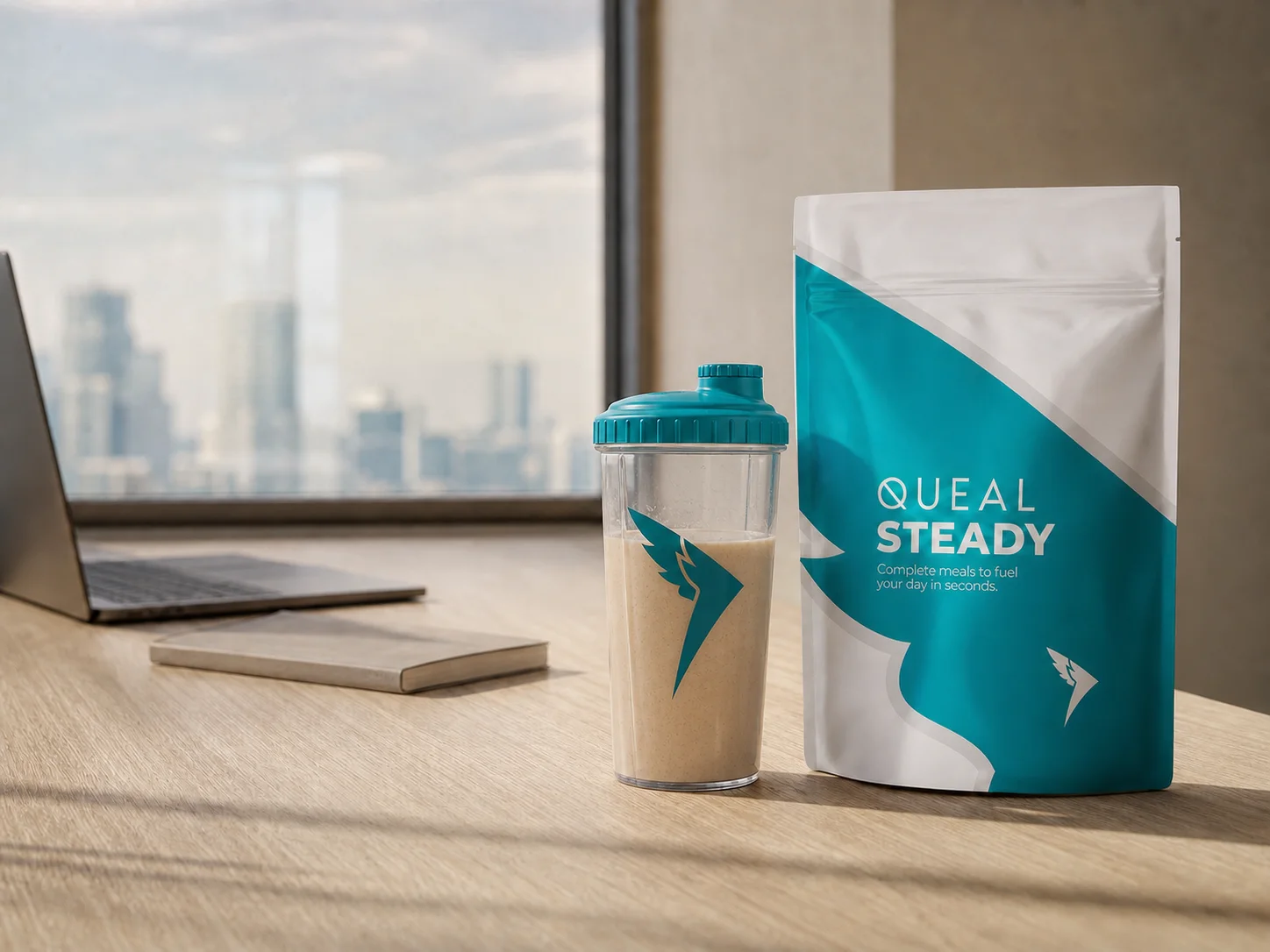
Picture the actual breakfast or lunch:
- Do you have water, a shaker and somewhere to wash it?
- Will you prepare the shake immediately before drinking?
- Can you follow the product’s storage instructions?
- Do you enjoy drinking a meal, or would you prefer something to chew?
Try a small quantity during an ordinary workday. Notice the sweetness, thickness, aftertaste and whether the portion suits you. Another person’s review cannot settle those preferences.
Powder can make carrying lunch easier, but preparation and cleaning still take effort. A shake may also feel less satisfying as an eating experience than a bowl or sandwich, even when you like its flavour.
6. Check the purchase commitment
Compare the total you will pay, including delivery and any equipment. Use your intended portion when working out how many meals a bag provides. Our Steady cost guide shows how to compare the same portion across one-time and subscription prices.
Check whether the displayed price requires a subscription, a large order or an introductory offer. Read cancellation and returns terms before relying on them. A smaller first order may cost more per meal while reducing the chance of being left with flavours you do not enjoy.
Copy this comparison worksheet
Fill one column per product using the current label and checkout.
| Check | Product A | Product B |
|---|---|---|
| Intended use: everyday meal or weight control? | ||
| My portion: grams, energy and mixing liquid | ||
| Nutrition, including fibre and micronutrients | ||
| Allergens, caffeine and ingredients to check | ||
| Taste, texture, preparation and storage | ||
| Delivered cost and purchase commitment |
Choose the option that passes your essential checks and works in practice. Keep room for the other foods and meals you enjoy; convenience does not require making every meal the same.
Research your options with your own AI
Copy the prompt below into the AI assistant you use. It starts by asking about your location, allergies, preferences and routine, then looks for current product information. You choose what to share; you do not need to provide your full address or medical history. Check important product details with the manufacturer before buying.